Reviewed by Dietitian Jessica Ball, M.S., RD
Credit: Recipe photos: Ali Redmond and Brittney Cottrell. EatingWell design.
About This Plan
This 7-day plan is set at 1,800 calories, with modifications for 1,500 and 2,000 calories.
Each day provides at least 80 grams of protein and 30 grams of fiber to support energy, gut health, satiety and blood sugars.
This plan prioritizes vegetarian protein sources like edamame, tofu, beans, eggs and yogurt for sustained energy and fullness.
Vegetarian diets are linked with better blood sugars, gut health and cholesterol. So whether you’re a lifelong vegetarian or you’re thinking of giving plant-forward eating a try, this meal plan is for you. You don’t have to worry about missing out on protein because each day is packed with 80-plus grams of protein for lasting energy and fullness. There’s no meat, poultry or fish, so the protein comes from plant foods like tofu, edamame and beans, along with vegetarian animal proteins like Greek yogurt, cottage cheese and eggs. Each day also packs at least 30 grams of fiber to keep your tummy healthy and satiated.
Meal Plan At-a-Glance | |||||||
|---|---|---|---|---|---|---|---|
DAY | 1 | 2 | 3 | 4 | 5 | 6 | 7 |
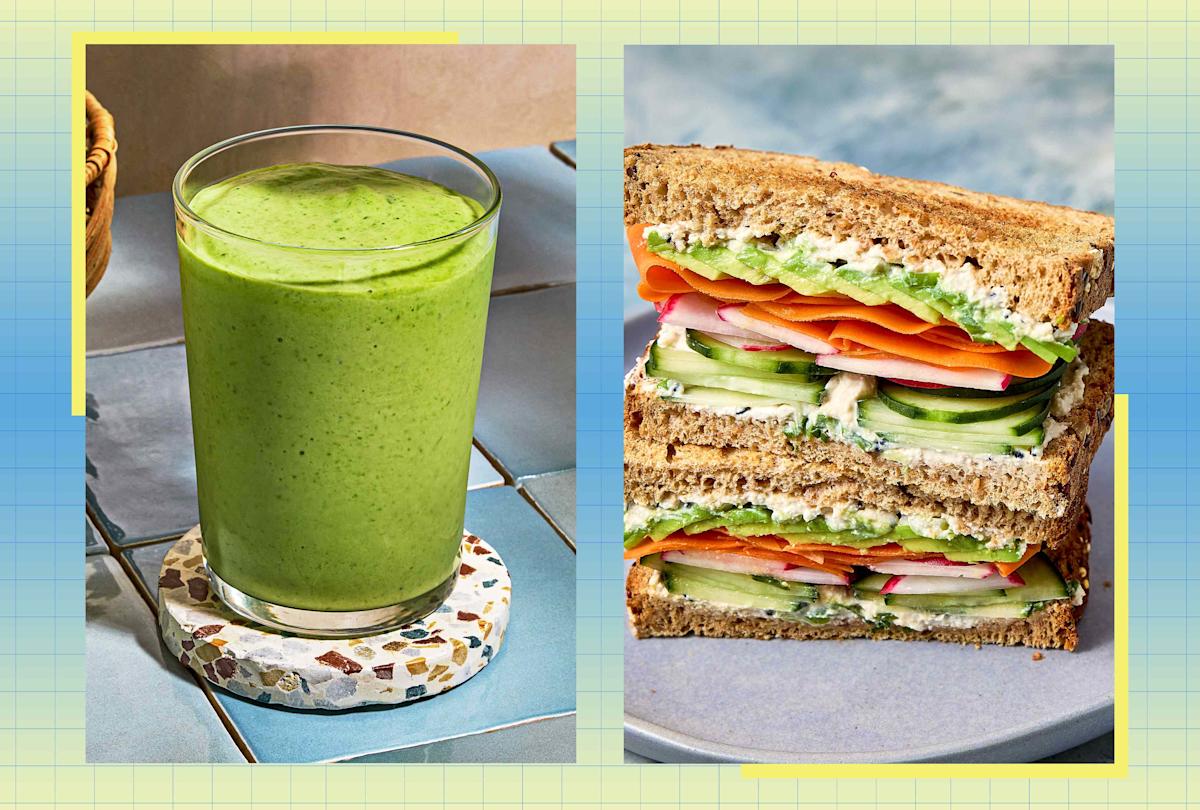
MEALS | Breakfast: Tomato Asparagus Quiche, Banana ——– Lunch: Cucumber Protein Sandwich & Edamame ——– Dinner: Black Bean Veggie Smash Burgers | Breakfast: Spinach Avocado Smoothie ——– Lunch: Bento Box & Hard-Boiled Egg ——– Dinner: Fried Tofu, Collards & Yam | Breakfast: Spinach Avocado Smoothie ——- Lunch: Bento Box & Hard-Boiled Egg ——– Dinner: Easy Creamy Tofu Curry | Breakfast: Berry Kefir Smoothie & Chia ——– Lunch: Bento Box & Hard-Boiled Egg ——– Dinner: Chipotle Tofu Tacos & Avocado | Breakfast: Berry Kefir Smoothie & Chia ——– Lunch: Bento Box & Hard-Boiled Egg ——– Dinner: Kimchi Tofu Soup & Brown Rice | Breakfast: Southwest Quesadilla & Avocado ——– Lunch: Brie Blackberry Grilled Cheese ——– Dinner: Three-Bean Chili Mac & Yogurt | Breakfast: Black Bean Protein Breakfast Bowl ——- Lunch: Brie Blackberry Grilled Cheese ——– Dinner: Creamy Caramelized Cauliflower Pasta |
DAILY TOTALS | Calories: 1,798 Fat: 59g Protein: 109g Carbs: 225g Fiber: 43g Sodium: 1,772mg | Calories: 1,779 Fat: 82g Protein: 94g Carbs: 187g Fiber: 40g Sodium: 1,853mg | Calories: 1,780 Fat: 72g Protein: 89g Carbs: 215g Fiber: 38g Sodium: 1,895mg | Calories: 1,817 Fat: 82g Protein: 103g Carbs: 194g Fiber: 44g Sodium: 2,046mg | Calories: 1,766 Fat: 91g Protein: 85g Carbs: 170g Fiber: 33g Sodium: 1,860mg | Calories: 1,795 Fat: 83g Protein: 103g Carbs: 188g Fiber: 51g Sodium: 1,310mg | Calories: 1,776 Fat: 70g Protein: 84g Carbs: 220g Fiber: 36g Sodium: 1,895mg |
Day 1
Daily totals: 1,798 calories, 59 g fat, 109 g protein, 225 g carbohydrates, 43 g fiber, 1,772 mg sodium
Breakfast (423 calories)
Lunch (438 calories)
1 cup prepared frozen in-pod edamame
Dinner (491 calories)
Snacks
1 cup nonfat plain Greek yogurt + 1 cup blueberries (217 calories)
2 pitted Medjool dates + 1 Tbsp. peanut butter (229 calories)
To make it 1,500 calories: Omit avocado from breakfast and omit Greek yogurt from snack.
To make it 2,000 calories: Add ¼ cup unsalted dry-roasted peanuts as a snack.
Day 2
Daily totals: 1,779 calories, 82 g fat, 94 g protein, 187 g carbohydrates, 40 g fiber, 1,853 mg sodium
Breakfast (357 calories)
Lunch (458 calories)
Dinner (478 calories)
Snacks
1 cup prepared frozen in-pod edamame (129 calories)
¼ cup unsalted dry-roasted peanuts (214 calories)
1 medium orange + ½ cup unsalted 1% cottage cheese (143 calories)
To make it 1,500 calories: Omit peanuts and orange from snacks.
To make it 2,000 calories: Add 2 pitted Medjool dates + 1 Tbsp. peanut butter to snacks.
Meal-Prep Tips
Prepare hard-boiled eggs to have with lunch on Days 2 through 5.
Day 3
Daily totals: 1,780 calories, 72 g fat, 89 g protein, 215 g carbohydrates, 38 g fiber, 1,895 mg sodium
Breakfast (357 calories)
Lunch (458 calories)
Dinner (548 Calories)
Snacks
1 cup nonfat plain Greek yogurt + 1 cup blueberries (217 calories)
1 cup carrots + ¼ cup hummus (200 calories)
To make it 1,500 calories: Omit hard-boiled egg from lunch and omit the carrots + hummus snack.
To make it 2,000 calories: Add 1 cup unsalted 1% cottage cheese and 1 medium orange to snacks.
Day 4
Daily totals: 1,817 calories, 82 g fat, 103 g protein, 194 g carbohydrates, 44 g fiber, 2,046 mg sodium
Breakfast (355 calories)
Lunch (458 calories)
Dinner (512 calories)
Snacks
1 cup prepared frozen in-pod edamame (129 calories)
1 banana + 1 Tbsp. peanut butter (200 calories)
1 cup unsalted 1% cottage cheese (163 calories)
To make it 1,500 calories: Omit hard-boiled egg from lunch and omit the banana + peanut butter snack.
To make it 2,000 calories: Increase to 2 Tbsp. chia seeds with breakfast and add 2 pitted Medjool dates to snacks.
Day 5
Daily totals: 1,766 calories, 91 g fat, 85 g protein, 170 g carbohydrates, 33 g fiber, 1860 mg sodium
Breakfast (355 calories)
Lunch (458 calories)
Dinner (596 calories)
Snacks
¼ cup unsalted dry-roasted peanuts (214 calories)
1 medium orange + ½ cup unsalted 1% cottage cheese (143 calories)
To make it 1,500 calories: Omit chia seeds from breakfast and omit the peanuts snack.
To make it 2,000 calories: Increase to 2 Tbsp. chia seeds with breakfast and add 1 cup carrots + ¼ cup hummus to snacks.
Day 6
Daily totals: 1,795 calories, 83 g fat, 103 g protein, 188 g carbohydrates, 51 g fiber, 1,310 mg sodium
Breakfast (336 calories)
Lunch (410 calories)
Dinner (469 calories)
¼ cup nonfat plain Greek yogurt
Snacks
2 hard-boiled eggs (155 calories)
1 banana + 2 Tbsp. peanut butter (296 calories)
1 cup prepared frozen in-pod edamame (129 calories)
To make it 1,500 calories: Omit the banana + peanut butter snack.
To make it 2,000 calories: Add 1 cup carrots + ¼ cup hummus to lunch.
Day 7
Daily totals: 1,776 calories, 70 g fat, 84 g protein, 220 g carbohydrates, 36 g fiber, 1,895 mg sodium
Breakfast (391 calories)
Lunch (410 calories)
Dinner (529 calories)
Snacks
1 cup nonfat plain Greek yogurt + 1 cup blueberries (217 calories)
2 pitted Medjool dates + 1 Tbsp. peanut butter (229 calories)
To make it 1,500 calories: Reduce snack Greek yogurt portion to ¾ cup and omit the dates + peanut butter snack.
To make it 2,000 calories: Add 1 cup carrots with ¼ cup hummus to lunch.
Frequently asked Questions
Is it OK to mix and match meals if there’s one I don’t like?
Yes! This meal plan is meant to serve as inspiration. It doesn’t need to be followed exactly to reap the benefits. When choosing recipes, we made sure to check the calories, fiber, protein and sodium to align with the parameters of this plan and be within our sodium limits. If you’re making a recipe swap, it may be helpful to choose a recipe with similar calories, fiber, protein and sodium levels. For more inspiration, check out these delicious vegetarian recipes.
Can I eat the same breakfast or lunch every day?
Definitely, it’s fine to eat the same breakfast or lunch every day. The breakfasts range from 336 to 423 calories while the lunches span 410 to 458 calories. These ranges are fairly close, though if you’re closely monitoring your calories or other nutrients, like protein, you may want to adjust a snack or two.
Why is there not a 1,200-calorie modification?
We no longer provide modifications for 1,200-calorie days in our meal plans. The 2020-2025 Dietary Guidelines for Americans suggests that limiting calories to 1,200 per day is too low for most people to meet their nutritional needs, plus it’s unsustainable for long-term health and well-being.
Health Benefits of a Vegetarian Diet
One of the most common reasons people go vegetarian is to support their health, and research backs up this motivator! Vegetarian diets tend to be lower in saturated fat and higher in fiber-rich plant foods like grains, fruits, veggies, legumes, nuts and seeds than omnivorous diets. In turn, research shows that vegetarians have a lower risk of cancer, type 2 diabetes, high cholesterol, hypertension and vascular diseases. This isn’t simply from eating less meat—it’s from getting in more fiber, antioxidants and anti-inflammatory compounds from plants. These foods support your gut microbiome, combat chronic inflammation and cell damage, and promote satiety, leading to a plethora of positive health outcomes. You’ll reap the most benefits by leaning on whole plant foods rather than highly processed ones.
How We Create Meal Plans
Registered dietitians thoughtfully create EatingWell’s meal plans to be easy-to-follow and delicious. Each meal plan meets specific parameters depending on the health condition and/or lifestyle goal it is targeting and is analyzed for accuracy using the nutrition database, ESHA Food Processor. As nutritional needs differ from person to person, we encourage you to use these plans as inspiration and adjust as you see fit.
Read the original article on EatingWell