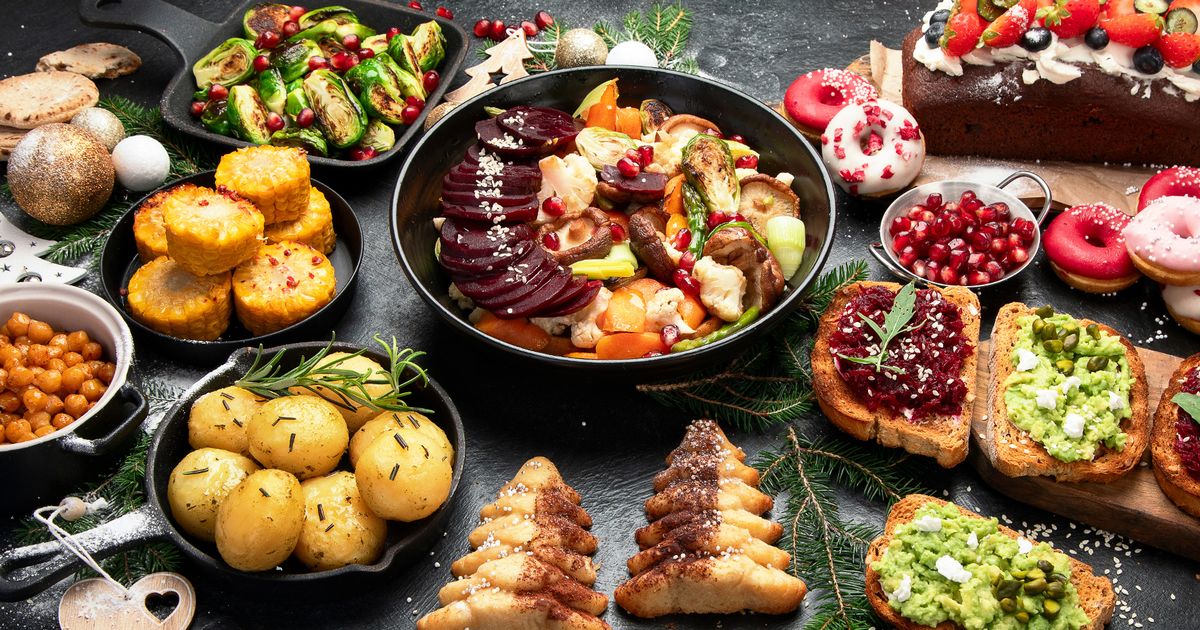
With Veganuary under way, many people will be thinking about cutting out animal products for the month – here are some things to consider if you’re going vegan for the month
As we usher in the New Year, many are considering healthier lifestyle choices to kickstart 2026. For some, this involves participating in Veganuary, a month-long initiative encouraging individuals to eliminate meat, animal products, and dairy from their diets for 31 days.
For many, this will be a significant shift, requiring them to abstain from consuming meat, fish, eggs, cheese, yoghurt, milk, or anything containing gelatine. However, the organisation behind Veganuary, which was launched in 2014, advocates that adopting a vegan diet can yield benefits for personal health and wellbeing, as well as for the environment and animal welfare.
Embracing veganism, even if only for a month, may seem daunting. To help ease this transition, food expert Sadia Badiei, who boasts more than a million followers on Instagram and thousands more across other social media platforms under the handle @pickuplimes, recently shared a YouTube video outlining seven insights she wishes she had known prior to becoming vegan.
1. Don’t worry about what you can’t eat
Sadia acknowledges that “Veganism can sound incredibly restrictive,” with no allowance for meat, eggs, fish, or dairy. She recalls her initial reaction: “When I first learned about it I remember thinking ‘ok so what’s even left for me to eat?’ But if you approach it only as a list of things you’re not allowed to have your brain tends to push back.”
She advised focusing on additions rather than restrictions when it comes to meals, reports Essex Live. Sadia explained: “Plant foods are so diverse: fruits, vegetables, grains, beans, lentils, soy products, nuts, and seeds. As you start to add more of these new foods, the old ones get gently crowded out.”
2. Don’t become fixated on protein
Sadia argued that protein’s significance has been “massively overhyped”. While acknowledging its necessity, she emphasised that protein “isn’t something most people need to obsess over, especially if you’re not a high-performance athlete or actively trying to build a lot of muscle.”
She offered a straightforward method for calculating daily protein requirements: take your body weight in kilograms and consume that equivalent in grams of protein. “The simplest approach is usually just to include a protein source in each meal, and with most snacks or at least some snacks if you can,” she advised.
3. Soy is one of the finest vegan protein options
Despite recent years seeing many people shun soy products due to concerns about hormonal effects, particularly in men, Sadia dismissed these worries as unfounded. She noted that the studies weren’t credible, and any one person would need to consume an implausible quantity of soy to experience any measurable hormonal impact.
“In reality soy is one of the most practical staples in a plant-based kitchen,” she stated. “It’s convenient, it’s affordable, and, as a bonus, it’s a complete protein, meaning it contains all the essential amino acids in one.”
4. Plant-based cuisine doesn’t need to be flavourless
Sadia acknowledges that a plant-based diet can sometimes lack flavour, but she suggests a simple solution: ensure every meal includes a source of fat, acid, salt, and sweetness. “If you balance these four components well, every meal is going to taste amazing,” she advised.
5. Your gut will need time to adjust
Transitioning to a vegan diet often means consuming more fibre than a meat or animal product-based diet, which can initially cause bloating or discomfort in the gut. However, Sadia reassures that this is merely your gut microbiome adjusting to the new diet, not a signal to revert back to meat or animal products.
6. There’s no need to track calories or nutrients
Instead of meticulously counting calories, Sadia advocates for the ‘plate method’ at each meal. This approach involves filling half your plate with fruits or vegetables, a quarter with grains or starch, and the remaining quarter with plant proteins like beans, lentils, or tofu. A small portion of healthy fats can also be included.
7. Don’t let self-doubt derail you
Sadia shared some advice for those considering the vegan lifestyle, stating: “Learning a few basics about plant nutrition makes everything easier. Obviously you don’t need to be a nutrition expert on day one, but I do think it helps to build the fundamentals so you do feel more confident in your choices and you know things like how do you get enough protein, [and] why does B12 matter.”
For further details about Veganuary, including recipes, meal plans, and coaching, visit veganuary.com