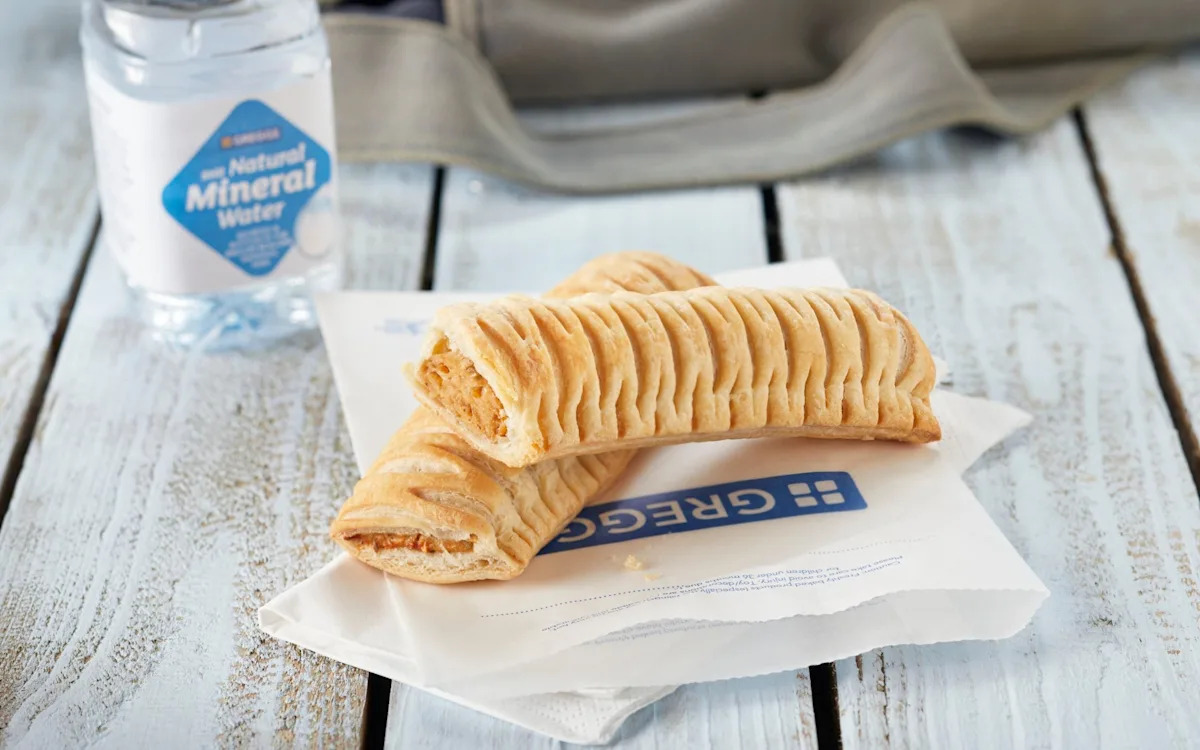
Perhaps nothing represented Britain’s vegan craze more than the launch of Greggs’ meat-free sausage roll.
Released by the bakery chain in January 2019, the vegan alternative was so popular that it was regarded in some corners of the internet as the UK’s cultural moment of the year.
However, seven years later, it appears the vegan revolution is running out of steam, with some joking on social media that life has just become too depressing to swear off meat.
Signs of veganism’s decline appeared in a recent report by the Good Food Institute Europe, which found that sales of plant-based food in Britain fell by 4.5pc to £898m in the year to January 2025.
Separate data from NIQ show that the share of households buying plant-based meat alternatives at least once a year has waned since 2022, with the organisation highlighting a shift in “flexitarian shoppers back into animal-based proteins”.
For many industry experts, the collapse in Britain’s vegan boom has been a long time coming.
“I told investment companies 10 years ago that veganism is a niche of a niche,” says Ged Futter, a retail expert and former buyer.
“It was no surprise to me at all. Veganism sits within vegetarianism and no one really talks about vegetarianism any more.”
The current state of affairs is a far cry from five years ago, when shoppers could hardly move for vegan ad campaigns.
Tesco, Marks & Spencer, Asda and Aldi all unveiled plant-based ranges while KFC, Krispy Kreme and Magnum made similar attempts to cash in on the vegan hype.
But many are starting to realise the appetite from consumers simply isn’t there. Last year, Wagamama axed a string of vegan favourites from menus, including its “Vegatsu” curry and its “vegan K-Dogs”. Andy Hornby, the chief executive of the chain’s owner, The Restaurant Group, argued that interest from diners wasn’t high enough to justify continuing the dishes’ inclusion.
Wagamama has axed a string of non-meat dishes from its menus, including its ‘Vegatsu’ curry
Marketing for the chain’s most recent menu additions makes noticeably less of a fuss about its vegan credentials.
“People are realising that the volumes going through fully vegan products are very low,” says Futter.
“For manufacturers, when volumes are that small and you can’t see a long-term future, there comes a point where you decide to do something else.”
Last year was also a reckoning for businesses that sought to dominate the vegan market.
In April, Neat Burger, the vegan burger chain backed by Leonardo DiCaprio and Lewis Hamilton, shut all of its UK restaurants after suffering substantial losses.

Neat Burger has closed all of its UK restaurants – Vuk Valcic/Alamy
Yet Britain is not alone – vegan specialities have also vanished from menus across Europe.
The McDonald’s plant burger was quietly pulled from Austrian Branches in July while Domino’s shrank its vegan offering as part of a November relaunch.
Meat-free menus are only a cost-saver for restaurants if vegan dishes sell, says Grace Withers, of the Agriculture and Horticulture Development Board (AHDB) – but consumer appetite has been overestimated.
“Even when veganism was at its most popular, we saw far more people claiming to be vegan than actually managing to stick to it,” says Withers.
“People often lapsed when they were hungry and wanted something tasty. We saw this during Veganuary as well.”
Only 1pc of those who signed up for Veganuary made it to the end of the month having stuck to the diet, according to the AHDB, a public body which supports farmers and growers.
Cost has also been a factor, as plant-based substitutes such as Quorn and tofu have increased in price more than cheaper meats in recent years.
“Consumers are very price-driven because of the cost-of-living crisis,” says Withers. “Meat-free products are more expensive than pig meat and chicken, so they are not competing on price.”
Compounding vegan woes is the fact that some health-conscious consumers have moved on to other fads.
“As the trend for strength training continues to grow in popularity, protein intake has become more of a priority,” says Jenni Tardiff, a trainer at the Gym Group.
Data from retail analyst Kantar show that 46pc of shoppers try to include high-protein in their diets, up from 38pc in 2022.
Cultural headwinds have similarly shifted, particularly since Donald Trump re-entered the White House.
The food pyramid unveiled by his health department earlier this month put dairy and healthy fats at the top.
“We are seeing culture swing back towards celebrating real, simple food: red meat, butter and full-fat milk,” says Bia Bezamat, of Kantar. “Protein is easier to get from animal sources. Simplicity is resonating with people in a world that feels increasingly multi-layered and complex.”
The rise of weight-loss drugs has also been a factor, Bezamat says: “When you are on medication, you need to make sure you eat the nutrients you need and a diet as restrictive as veganism does not really support that.”
Elsewhere, a growing pushback against so-called “ultra-processed foods” has dented the popularity of meat-free substitutes.
“When you look at the back of the pack on some vegan products, the list of ingredients is enormous,” says Futter.
“A large proportion of vegan products are made from things people don’t really recognise or understand. Brands and supermarkets have recognised that this is not what customers are looking for.”
Despite the cut-through of the odd vegan product like oat milk, the hope of a wholesale vegan revolution has unravelled.
“I think there was an overestimation of how popular veganism would be,” says Bezamat, who compares it to the rise and fall of gluten-free diets.
“That was the original restrictive diet, where there was initially very little offer and then suddenly lots of products,” she says. “Now it just sits there on the shelf.”