SFGate and Yahoo may earn commission from links in this article. Pricing and availability are subject to change.
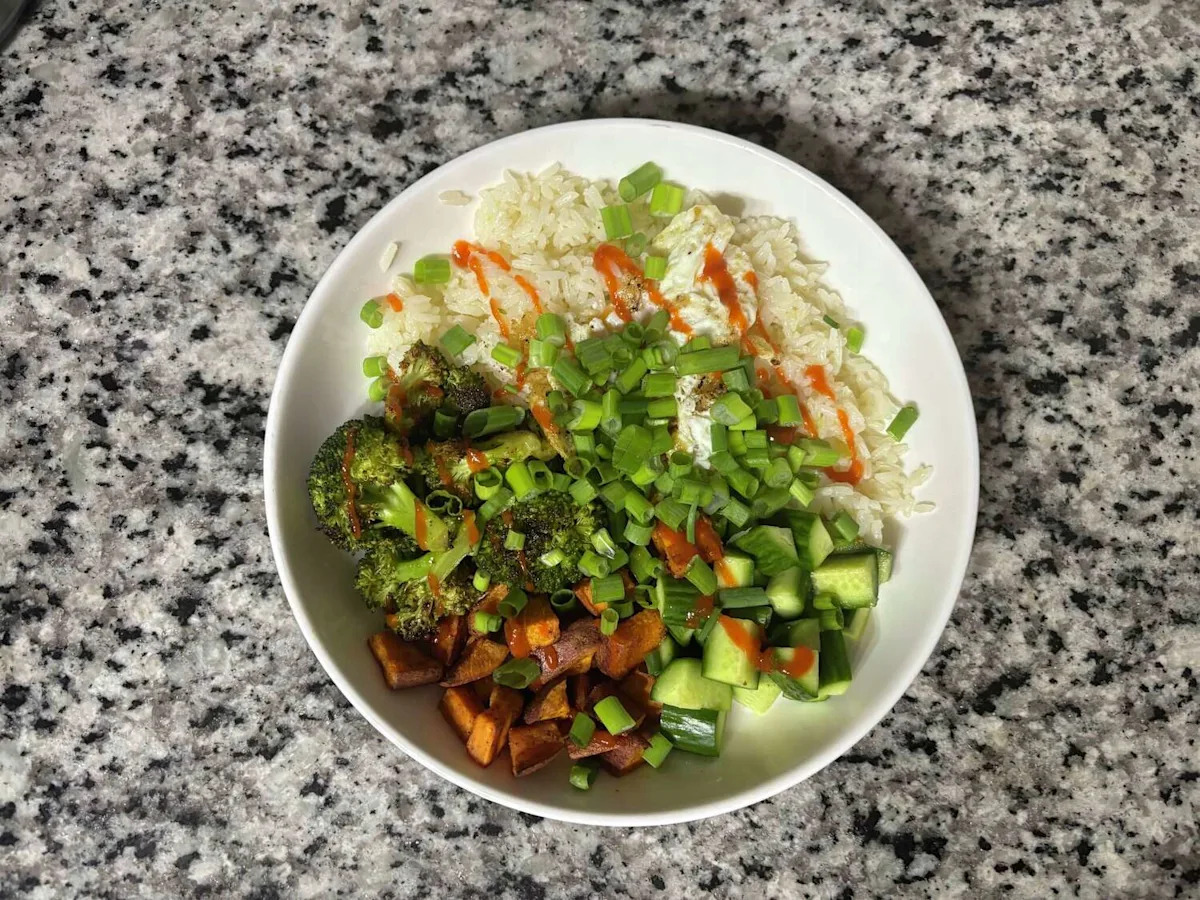
While the fried egg wasn’t picture perfect, the donburi was colorful and tasty. (Heather Kuldell-Ware)
Cooking vegetarian meals every week sounds simple until you’re the person responsible for planning them.
You want dinners that feel balanced, but it’s easy to fall into the same rotation: beans and rice, pasta, tofu stir-fries, maybe another grain bowl. Those staples are reliable, but after a while, the repetition sets in.
That’s when the “what’s for dinner?” fatigue starts creeping in. Even people who enjoy cooking can find themselves staring into the fridge, wondering what to make next. In my house, I’m what you might call the chief cooking officer. I handle grocery planning, write the shopping lists, keep track of what’s already in the pantry, and ultimately decide what will appear on the dinner table. I enjoy cooking, but feeding people week after week takes more planning and creativity than most people realize. My household is also split between vegetarians and meat-eaters, just to add a curveball.
Over the years, I’ve experimented with plenty of ways to make cooking for my family easier. I’ve tried traditional meal kits with pre-portioned ingredients, grocery-and-recipe hybrids, and various shortcuts designed to simplify weeknight cooking. So when I tested a box from EveryPlate, I came to it with a pretty clear question: could an affordable meal kit help break the vegetarian dinner rut without creating more work in the kitchen?
Meal kit services have taken off as families look for easier ways to plan weeknight dinners. EveryPlate sits at the cheaper end of that market, with meals starting around $5.99 per serving.
Choosing recipes each week
EveryPlate rotates about 36 recipes each week, which can be filtered by category, including Veggie, Smart & Fit, Quick & Easy, Meat & Veggie, and Family Faves. The week I selected my meals, there were eight vegetarian options.
I include eggs and dairy in my diet, though not all vegetarians do. Many of the vegetarian recipes featured cheese, sometimes as a central ingredient and sometimes as a garnish that could easily be skipped. A few also called for butter or mayo, though butter is easy to substitute, and mayo can simply be omitted if you lean more vegan.
For my test box, I chose three vegetarian meals sized for six servings to feed a household of five:
Sweet potato and broccoli donburi with fried eggs, scallion lime rice, pickled cucumber, and sriracha mayo
Sweet potato and black bean stew with Monterey Jack and scallions
Tie-dye pizza pies with fresh mozzarella, pesto, and ranch
Like most meal delivery services, EveryPlate plans are built around even numbers of servings, so households with an odd number of diners will likely end up with an extra portion. In practice, that usually becomes lunch the next day.
You may also notice some ingredient overlap across recipes. In my case, two meals featured sweet potatoes, a reminder that repeating ingredients is one way the service keeps costs low. The dishes draw inspiration from global cuisines and are easy to tweak with ingredients from your own pantry if you want to stretch a meal or adjust the flavors.
Specs
Meal type: Pre-portioned ingredient meal kits with recipe cards
Meal choices: 3, 4, or 5 meals per box. Add-ons available.
Recipes per week: About 36 rotating recipes, though vegetarian options are usually around 9
Servings: 2 or 4 standard portions (recipes can scale up)
Cooking time: Usually 25 to 40 minutes
Skill level: Beginner-friendly
Price: Meals start at $5.99 per serving, and include a $10.99 weekly shipping fee. Intro offer drops prices to $2.99 per meal for the first box and 10% off for one month.

Unpacking the EveryPlate package felt a bit like lifting a regular brown grocery bag out of a box. (Heather Kuldell-Ware)
Packaging and delivery
Meal kit packaging can be a lot. If you’ve tried a few services, you’ve probably opened a box and wondered what to do with all the insulation and freezer packs.
EveryPlate found a nice middle ground. Inside the cardboard box was a frozen cooling pack and the ingredients gathered in a brown paper bag. Instead of thick cooler-style insulation, the box used a lighter bubble-wrap-style liner, which kept things cold without excessive packaging.
The only minor issue was a bit of condensation from the ice pack, which left the paper bag slightly damp, though nothing inside was damaged. Some produce arrived wrapped in plastic for freshness, like the green onions, which is understandable for shipping. However, it’s best to store them with plastic removed so things don’t over-ripen. The sauces can be in packets or small-serving cups.

The recipe cards are large and easy to read, while the ingredients are pre-portioned or at least counted out. (Heather Kuldell-Ware)
Recipe cards and instructions
The recipe cards are straightforward and easy to use. They’re printed on sturdy cardstock, about the size of an 8-by-10 sheet, and list ingredient measurements for both two- and four-serving versions. If you’re scaling up to six servings as I did, you’ll need to do a little math, but it’s simple enough.
Each card also includes a box listing pantry staples not included in the kit, such as kosher salt, black pepper, butter or cooking oil.
One small surprise: the donburi recipe included fried eggs, but didn’t send eggs. It’s possible I missed that detail while choosing the meal, but it’s a reminder to glance through the ingredient list before starting.
Many of the recipes also include optional directions for adding meat. For example, the sweet potato and black bean stew included measurements and instructions for adding ground beef, and the donburi bowl suggested chopped chicken breast. Vegetarians can ignore those sections, but they highlight the recipes’ flexibility.
Another nice detail is that the cards are worth saving. Some recipes use proprietary blends or sauces, like Tex-Mex paste, so you may not be able to recreate every dish exactly. But for an experienced home cook, they’re close enough to reverse-engineer with a few smart swaps.

Cooking the sweet potato and black bean stew in a pot. (Heather Kuldell-Ware)
Cooking experience
The sweet potato and broccoli donburi bowl was the most involved recipe, mainly because it had several components that required getting the timing right. While the vegetables roasted on a sheet pan and the cucumber marinated in lime juice, I cooked rice on the stovetop, and toward the end, fried an egg in a separate pan before assembling the bowl. The instructions were clear and well-paced, guiding you through what to do while each part was cooking. The final bowl was flavorful and satisfying, with roasted vegetables, tangy cucumber, and spicy mayo tying everything together. The rice portion was larger than I usually prefer, but others might appreciate the generous serving.

The sweet potato and black bean stew was easy to cook up in one pot, and easy to omit toppings for vegetarians who don’t like dairy, and to include them for those who do. (Heather Kuldell-Ware)
By contrast, the sweet potato and black bean stew with Monterey Jack and scallions was a one-pot wonder. With a Southwest-style spice blend, tomato paste, Tex-Mex paste, and veggie stock concentrate, it landed somewhere between a stew and a chili: hearty, flavorful, and easy to pull together on a weeknight.
Price and value for vegetarians
One of the frustrating realities of eating vegetarian outside the home is the price. At many fast-casual restaurants, vegetarian dishes cost just as much as meat-based meals, even though the main protein has been removed. It feels like paying the same price for less food.
Protein is often the sticking point in vegetarian meals, and my one wish with EveryPlate would be a slightly stronger focus there, though that’s a common challenge with meatless cooking. That said, the meals still felt reasonably priced and satisfying. The portions were generous, and the ingredients tasted fresh. To me, the recipes delivered a balanced, home-cooked dinner.
Who should try EveryPlate?
For vegetarians with busy schedules, EveryPlate can be a welcome break from the constant planning that comes with home cooking. Instead of doing the mental math to figure out how to use half a cabbage or figuring out yet another way to cook beans and rice, the ingredients arrive portioned and ready to go.
The service is probably best suited for ovo-lacto vegetarians, meaning people who include eggs and dairy in their diets, since many of the recipes rely on ingredients like cheese, eggs, butter, or sour cream.
These meals are designed to be simple and flavorful dishes that don’t require deep cooking knowledge. If you’re looking for affordable vegetarian dinners that help break the “same old recipes” cycle without adding more work to your week, EveryPlate is a solid option.
Here’s how we choose products to recommend to you. Prices are accurate at the time of publication and subject to change.
This article originally published at EveryPlate review: A budget meal kit that shakes up vegetarian weeknight dinners.