Plant-based foods are confronting a slowdown that’s hard to ignore.
Alt-meat and dairy alternatives aren’t cycling through shelves the way they once did across the grocery channel. The industry is absorbing declining retail sales and shrinking distribution after expanding aggressively during the boom years.
And the strain isn’t confined to supermarkets. In quick service, several vegan concepts have spent the past few years battling closures, downsizing, or insolvency. Kevin Hart’s Hart House shuttered all four Los Angeles units in 2024. Neat Burger, a plant-based chain backed by Lewis Hamilton and Leonardo DiCaprio, shuttered all its remaining stores in the U.K. last spring after U.S. and Dubai closures. Veggie Grill saw heavy footprint reduction and ongoing financial turbulence before landing a savior acquisition by Next Level Burger.
Plenty of brands still cater to flexitarians and vegans, but the steady drumbeat of bad news has fed a broader narrative that the plant-based revolution may be losing steam.
“It’s certainly been a tough time,” says Chris Treloar, CEO of vegan fast-casual chain PLNT Burger. “Just look at the headlines, and you can see our competitors and even some of our vendors are going out of business.”
Industry watchers often describe the shift as a classic hype-cycle correction. A disruptive category breaks out with excitement, sparks a flood of new entrants, and enjoys early hypergrowth. Eventually, supply outpaces demand, differentiation thins, and the market contracts before resetting on steadier footing.
The pattern is familiar. Think dotcoms, e-commerce, and electric vehicles. Plant-based is just working through its own version, Treloar says, now layered with inflation and rising household costs.
“Look at businesses that aren’t plant-based, and everybody is still struggling,” he says. “More and more people are just pulling back and deciding that they need to conserve money.”
For younger categories without many decades of consumer familiarity, the pressure hits harder. Still, Treloar believes that plant-based brands that hold their ground will be well-positioned when conditions loosen.
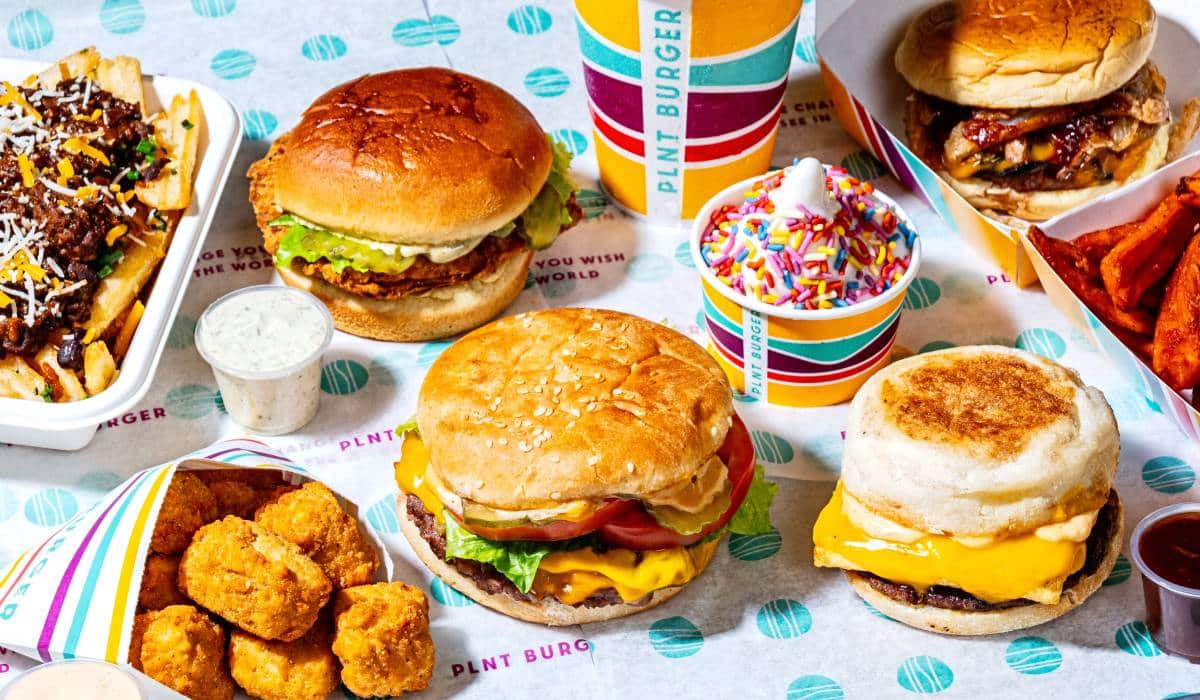
PLNT Burger aims to be one of them. While some vegan concepts have stalled, the brand has quietly reached 13 locations in five years, including 11 inside Whole Foods and two standalone. That embedded model keeps development costs low and funnels in consistent traffic, allowing the business to stay lean while expanding. Treloar points to tight overhead, competitive pricing, and strategic partnerships with alt-meat makers as key levers that have kept the company stable even as the category contracted.
Staying disciplined hasn’t meant staying static, though. Over the past year, PLNT Burger has upgraded its cheese, chicken, and soft serve, while rolling out new items like TiNDLE Wings to reinforce value and routine craveability.
Marketing has taken a more assertive turn, though Treloar notes reaching vegans and vegetarians is easy. The real opportunity is converting meat eaters. He wasn’t vegan when he joined PLNT Burger, and that perspective helped inspire a key move: swapping a $5 new-member discount for a free sandwich of choice. The change drove a roughly 200 percent jump in loyalty sign-ups and opened the door to more non-vegan and non-vegetarian first-timers.
“We’ve always known that to build a scalable business, you’re going to have to have omnivores or carnivores wanting the product,” Treloar says. “Pre-vegan me wouldn’t have even tried a vegan product had it not been free. But when you break down every barrier to entry, people are much more likely to try it.”
For most brands, the goal isn’t to convert everyone to veganism but to make it easier for everyday diners to choose a plant-based option occasionally. Messaging that draws them in the first place is crucial, because even as products get better, old assumptions linger about taste, price, and who plant-based food is really for.
“There’s this stereotype that the whole plant-based movement has been positioned as niche and expensive,” says Adam Wilks, president of Mr. Charlie’s Told Me So, a growing vegan fast-food chain. “It’s an obstacle that we’re trying to break through.”
That perception has helped keep the category from reaching mainstream fast-food scale, adds cofounder Taylor McKinnon. He says the challenge isn’t so much a lack of demand as it is building a concept that can grow efficiently in a young, still-shifting market. Scaling requires both tight systems and a clear identity, and those are areas where he believes many early entrants fell short, lacking either operational footing or the storytelling needed to spark curiosity and maintain engagement.
Mr. Charlie’s has leaned into a playful, distinctive tone to stand out and reach consumers. The brand riffs on McDonald’s with its red-and-yellow aesthetic and signature “Frowny Meals,” packaged in bright boxes with a sad face graphic and the invitation to “turn that frown upside down.” Its menu tucks plant-based alternatives behind cheeky names like “Not a Hamburger” and “Not Chicken Nuggets.”
But beneath the parody is a purpose-driven message. Mr. Charlie’s positions itself as a lifestyle brand with a focus on sustainability, personal wellness, and second chances through its hiring model, employing people who have been unhoused or formerly incarcerated. The tone may be irreverent, but the core idea is that choosing plant-based food shouldn’t feel like a sacrifice or a statement. It should simply feel fun, normal, and accessible.
“We’re not waving a flag, we don’t mock anybody, and we’ve never been disrespectful to the meat industry,” McKinnon says. “We’re just here to offer an alternative, but we’ve made it very approachable and very fun and very connecting for you to try it. I think that’s the disconnect that didn’t exist before.”
He believes many plant-based brands stumbled because they couldn’t close the gap between curiosity and confidence. The humor and approachability help disarm skepticism and give people an easy on-ramp.
This approach has fueled strong social media buzz and outsized awareness. By the end of 2025, the chain had four units open—three in California and one in Sydney, Australia—with rapid growth planned in the coming months and a target of 11 stores open by the end of Q1. Last year, the brand also signed a major development deal to bring its plant-based fare to more than a dozen locations in Arizona, and it is currently exploring franchising opportunities to expand across the U.S. and internationally.
Mr.Charlie’s spent the past few years laying its foundation: fine-tuning the menu, building out its team, and proving the model before embarking on this broader growth push. But scaling in this space comes with vulnerabilities.
McKinnon points to supply and distribution as one of the biggest challenges. As retail demand cools, some plant-based products are losing shelf presence. When supermarkets reduce assortments or exit the category, it destabilizes the distribution networks that both retail and restaurants rely on. Costs rise, availability becomes uneven, and operators shoulder the fallout.
To counter that volatility, Mr. Charlie’s has leaned into long-term supplier relationships and invested in building more unique IP across the menu, like PLNT Burger. That strategy reduces dependence on any single player and protects the brand in the face of broader turbulence.
Wilks and McKinnon remain optimistic about plant-based quick service despite the broader category reset. They see room for a culturally fluent, sharply defined concept to scale into the hundreds globally. And like Treloar, they believe the next phase hinges on a simple threshold: convincing more meat eaters to give their food a try. The good news is that the hurdle will keep getting lower as plant-based proteins continue to improve.
“It’s only going to be a matter of time before everybody feels comfortable enough to try it at least once,” McKinnon says. “And after you try it once, then we’ve probably got you for good.”